The best permanent jewelry welders in 2026: match the machine to your metals.
Your metals decide your welder. Gold-filled-only work starts around the Sunstone Zapp at $1,249; sterling wants the Zapp Plus 2 tier (from $1,699); platinum and heavy-gauge growth need an Orion-class machine (from $3,199, live-checked at Sunstone in August 2026). The $300–$800 no-name welders are where most beginner failures start. Here is the field, matched to what you'll actually weld.
By June Calloway, EditorLast updated: August 20, 2026
Start here
The tier logic: your metals decide your welder.
Different metals fuse at different energies, so the chain you plan to sell sets the machine you need. Operators report roughly these weld energies by metal, which is why an entry welder capped at low joules handles gold-filled but stops short of sterling and platinum.
| Metal | Typical weld energy | Which tier reaches it |
|---|---|---|
| Gold-filled & fine chain | ~3–15 J | Any tier, including the entry Zapp (3–10 J). |
| Sterling silver | ~10–25 J | Zapp Plus 2 and up (full 1–30 J range). |
| Platinum & heavy gauge | 30 J and above | Orion-class machine with headroom to 30 J. |
Weld-energy figures as reported by working operators; verify against your own chain gauge on scrap first. Machine joule ranges from each manufacturer's live spec page (checked August 2026).
Our top three
A machine for each tier of metals.
All three are Sunstone pulse-arc machines, mapped to the tier logic above. Tier 1, gold-filled only: the entry Zapp at $1,249. Tier 2, add sterling: the Zapp Plus 2 from $1,699, which opens the full 1–30 J range. Tier 3, platinum and growth: the Orion mPulse from $3,199, with the finest control and the headroom heavier metals need. Sunstone is the manufacturer most working operators cite. Prices live-checked at Sunstone in August 2026; confirm current figures on each linked page.
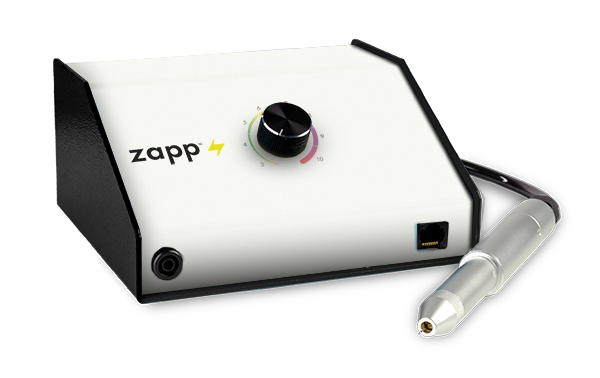
Sunstone's entry machine: a 3–10 joule pulse-arc welder made and supported in the USA, argon-ready, and backed by a 3-year manufacturer warranty. The lowest-cost way onto a name-brand platform with real phone support.
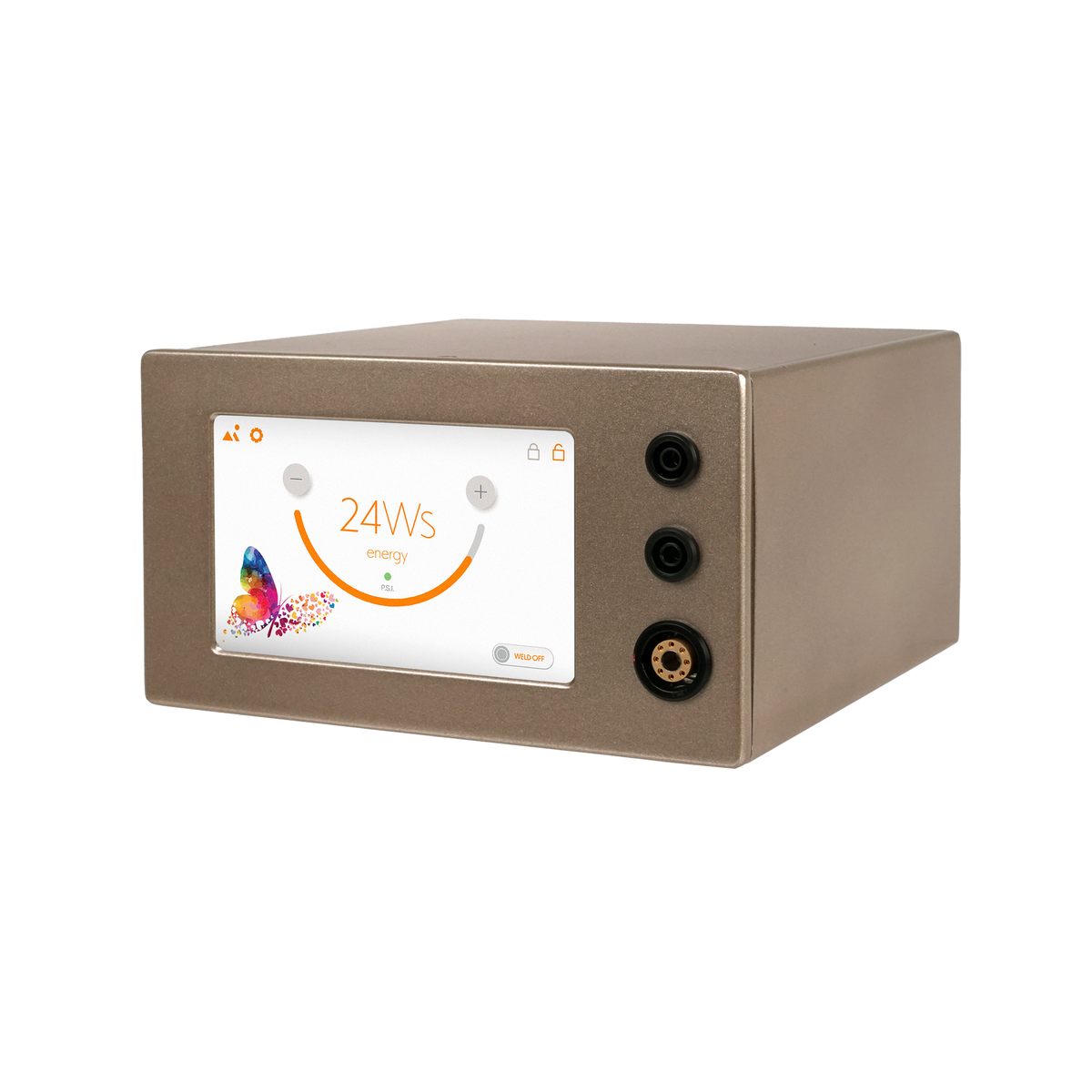
View at SunstoneSunstone's most advanced permanent-jewelry welder and, by the manufacturer's account, the pulse-arc machine most PJ artists choose. A touchscreen system with Tru-Fire Technology®, a 1–30 joule range and 0.5-joule increments from 1–15 joules, and a built-in power supply, built for high-volume studios and events.
View at Sunstone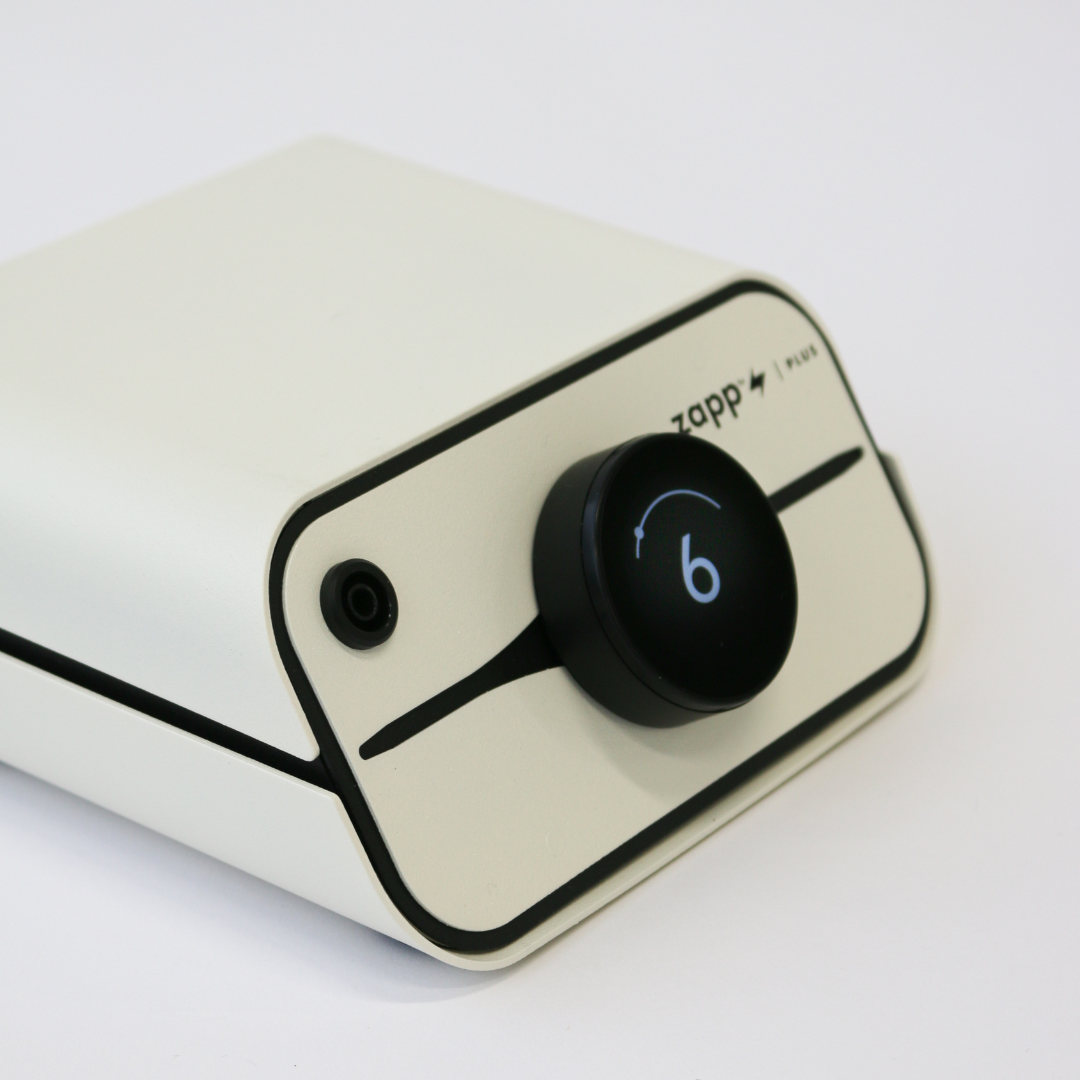
The step up from the Zapp: a digital energy dial and the full 1–30 joule range for operators who want to weld every standard metal but do not need a full touchscreen studio unit. At 1.9 lbs it is the most portable Sunstone. This is the current Zapp Plus 2 sold direct by Sunstone.
View at SunstoneFull reviews: Sunstone Zapp, Orion mPulse, and the Pepetools Helix. Head-to-heads: Zapp vs Orion mPulse, Zapp vs Zapp Plus 2, Helix vs Zapp Plus 2, and Sunstone vs budget welders, plus the whole Sunstone lineup.
Side by side
The field, compared.
The short version: buy the most energy range and support you can justify against your expected event volume. Fine chain needs low, controllable joules; heavier links need headroom. Here is how the field lines up.
| Welder | Energy range | Interface | Support | Best for |
|---|---|---|---|---|
| Orion mPulseBest overall | 1–30 J (0.5 J steps) | Touchscreen | US phone support | High-volume studios & events |
| Zapp Plus 2 | 1–30 J (dial) | Digital dial | US phone support | Adding sterling |
| Zapp (beginners) | 3–10 J (1 J steps) | Dial | US phone support, 3-year warranty | First-time operators |
| Sunstone Zapp Plus (gen-1), Amazon bundleBridge pick | Zapp-class range | Dial | US support (Sunstone) | Sunstone quality via Amazon |
| Budget Amazon pulse-arc | Varies by model | Basic | Unknown / seller | Testing the waters |
Specs and prices from manufacturer pages, live-checked August 2026 (Zapp $1,249; Zapp Plus 2 from $1,699; Orion mPulse from $3,199). Prices drift; confirm on the linked pages before you buy.
The method
Why a pulse-arc welder at all.
"Pulse arc" is the welding method behind almost every serious permanent-jewelry setup. A capacitor dumps a precise, millisecond pulse of energy through a tungsten electrode, fusing the metal without heating the whole piece.
Compared with an open flame or a resistance spot welder, a pulse-arc welder gives you cleaner joints on thin gold-filled and sterling chain. You get repeatable results once you dial in the joules for a given gauge.
That control is the whole game. Too little energy and the weld is cold and weak; too much and you blow through fine chain.
This is why the machines with finer joule increments (the Orion mPulse steps in half-joules between 1 and 15 J) are worth the premium once you weld a range of metals in a day. Argon shielding, available on the Sunstone line, pushes weld quality further by keeping oxygen off the joint.
There are other reputable pulse-arc machines in the wider trade. The Pepetools Helix, for example, is sold direct and also bundled into the LINKED training program's trainee packages. We cover it in a separate review. If you go through a training company, ask which welder their program includes before you buy a second machine.
The bridge pick
Sunstone quality, Amazon checkout.
There is a middle option that new operators often miss. Sunstone sells a first-generation Zapp Plus welder bundle on Amazon, the same US-made platform as the machines above, packaged with an applicator and grounded pliers, bought through Amazon with Prime shipping and easy returns instead of ordering direct. It is the bridge between a sub-$500 import and buying Sunstone direct: name-brand weld quality and support at the entry end of the range. One caveat worth repeating: this bundle is the gen-1 Zapp Plus, not the current Zapp Plus 2 that Sunstone sells on its own site.

The bridge between budget imports and buying Sunstone direct: the first-generation Zapp Plus welder, bundled with an ADL applicator and grounded jeweler's pliers, sold on Amazon. You get Sunstone build quality and US support at the entry end of the range. Note this is the gen-1 Zapp Plus, not the current Zapp Plus 2 that Sunstone sells directly.
- Genuine Sunstone welder: the same US-made platform, not a generic import
- Bundle adds an ADL applicator and grounded pliers to get you welding sooner
- Buys on Amazon (Prime shipping, easy returns) instead of direct from Sunstone
The risk end of the market
Why the $300–$800 Amazon welders keep failing beginners.
Search "permanent jewelry machine" on Amazon and you'll find sub-$800 pulse-arc and spot welders. Operators report the same pattern with the cheapest of them:
- No ETL certification.
- No US support or warranty.
- Unreliable arc ignition at low joules, which shows up as misfires and cold welds.
A cold weld tarnishes, snaps, or lets a bracelet fall off a customer's wrist. That's the reputation cost that actually sinks new operators.
This is a risk argument, not snobbery. A budget machine is a fair way to test whether the work is for you. But read recent reviews, confirm the joule range, and don't run a wedding booth on one.
- 1Micro pulse-arc welder for permanent jewelry (80A / 400W, w/ welding gun)
A compact 80A / 400W micro pulse-arc welder sold with a handheld welding gun, one of the cheaper ways onto a pulse-arc (not spot) platform. It can make a bracelet weld; treat duty cycle, replacement electrodes, and seller support as unknowns and read recent reviews before you commit an event to one.
- 2Healthible 100A permanent jewelry welder (110V pulse arc)
A 100A, 110V pulse-arc machine marketed specifically for permanent jewelry, with a bit more energy on tap than the smallest micro units. A reasonable budget test bench for fine chain. Confirm the joule range and support terms in the listing, and plan on a name-brand upgrade if the business sticks.
- 3Other budget pulse-arc welders for permanent jewelry
The wider field of sub-$500 pulse-arc machines that fill Amazon results. Listing photos look alike but the internals do not. Compare joule range, whether argon is supported, and recent reviews before buying. Best treated as a way to test the business, not the machine you run a wedding booth on.
The real number
Total cost of ownership: warranty, Circle plan, argon, accessories.
The sticker price isn't the whole spend. Sunstone machines carry a 3-year warranty, and an optional support plan, Sunstone Circle, runs about $15/month or $180/year for extended warranty, free two-way shipping, and a loaner while your unit is repaired. Whether that's worth it depends on how many events you'd lose to downtime.
Then there's the consumables and gear the machine doesn't include: an argon tank and regulator for cleaner welds on the Sunstone line, replacement tungsten electrodes, and the chain, clasps, and tools that turn a welder into a working booth. Budget for that layer up front. Our starter kit roundup covers everything else that goes in the case and when a bundled kit beats piecing it together.
$60–90
of profit per welded bracelet, as operators report. At that rate, even the $3,199 machine is a countable number of events, not a mystery. See your payback period on the tier you're considering.
Before you buy
How to choose the right welder.
Match energy range to your chain. If you'll sell fine gold-filled and sterling, prioritize low, finely-stepped joules. Heavier or mixed chain wants a machine with more headroom.
Weigh support against event risk. A weld that fails at home is an annoyance; one that fails at a paid event is lost revenue. US phone support and in-stock electrodes are worth real money.
Do the payback math first. At roughly $60–90 profit per bracelet (as operators report), a machine's price is a number of events, not a mystery. Run yours in our guide to starting a permanent jewelry business.
Don't buy the machine alone. You still need chain, clasps, and connectors. See our permanent jewelry starter kit roundup.
Welder questions, answered straight.
What kind of welder do you need for permanent jewelry?
Most working operators use a pulse-arc (also called micro-arc) welder. It fuses the two ends of a chain with a fast, contained electrical pulse, so there is no open flame and no solder. Spot and resistance welders are cheaper but give less consistent results on the fine gold-filled and sterling chain that customers want.
Is a permanent jewelry welder worth it?
The machine is the single largest startup cost, so the question is payback. Operators commonly report roughly $60–90 of profit on a welded bracelet after chain and clasp cost. On those figures a name-brand welder pays for itself across a modest number of events; the math is in our business guide.
Should you buy a Sunstone welder or a cheaper Amazon one?
A budget Amazon pulse-arc welder is the cheapest way to find out whether permanent jewelry is for you. A name-brand machine like a Sunstone earns its higher price through consistent welds, replacement-electrode supply, and US phone support you can reach when a weld fails in front of a paying customer.
New to all this? Start with what permanent jewelry actually is, then see what customers pay and the business startup guide.