By June Calloway, EditorLast updated: August 20, 2026
One machine keeps coming up when you ask working permanent jewelry artists what they weld on: Sunstone. That is not an accident. Sunstone is a US-based welder manufacturer whose permanent-jewelry line sits above the budget import field in price and, by operator accounts, in reliability when it matters most. What the premium buys is a 3-year warranty, a US phone number you can actually reach when a weld fails in front of a paying customer, and a supply of in-stock tungsten electrodes. Those three things are worth real money at a Saturday market or a bachelorette party booking.
One note before the lineup: Sunstone is the manufacturer. This is WeldWorthy’s independent read of the three machines from published specifications and operator reports. We have not lab-tested any of them; where a figure comes from the manufacturer we say so and link the source. Prices are live-verified from Sunstone’s own product pages as of August 2026 and are marked as estimates because they drift.
The Sunstone lineup at a glance
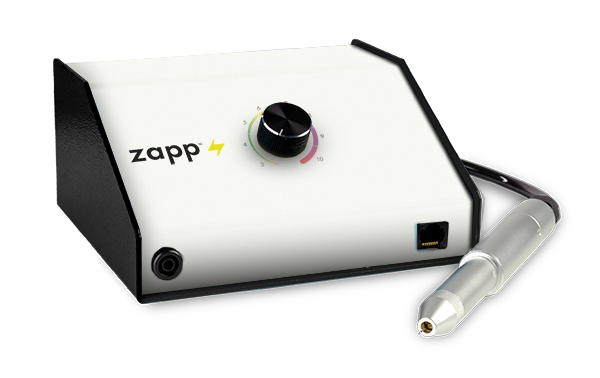
The lowest-cost way onto the Sunstone platform: 3–10 joules for gold-filled and fine chain. Around $1,249. Right for Ashley starting on markets and bachelorette parties.
View at Sunstone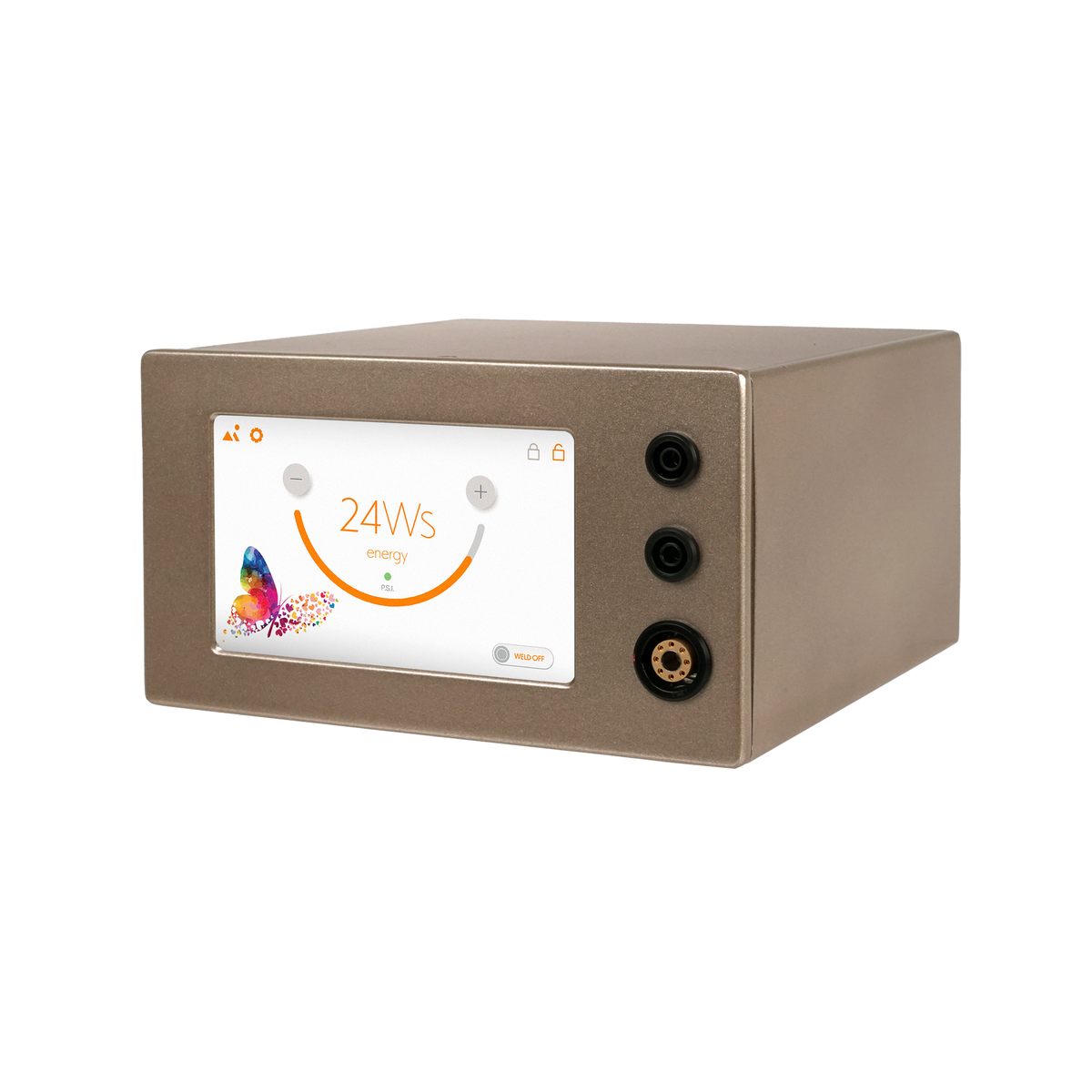
Touchscreen, Tru-Fire Technology, and 0.5-joule fine steps for busy studios welding mixed metals all day. From $3,199. The machine Olivia adds to a salon with existing foot traffic.
View at Sunstone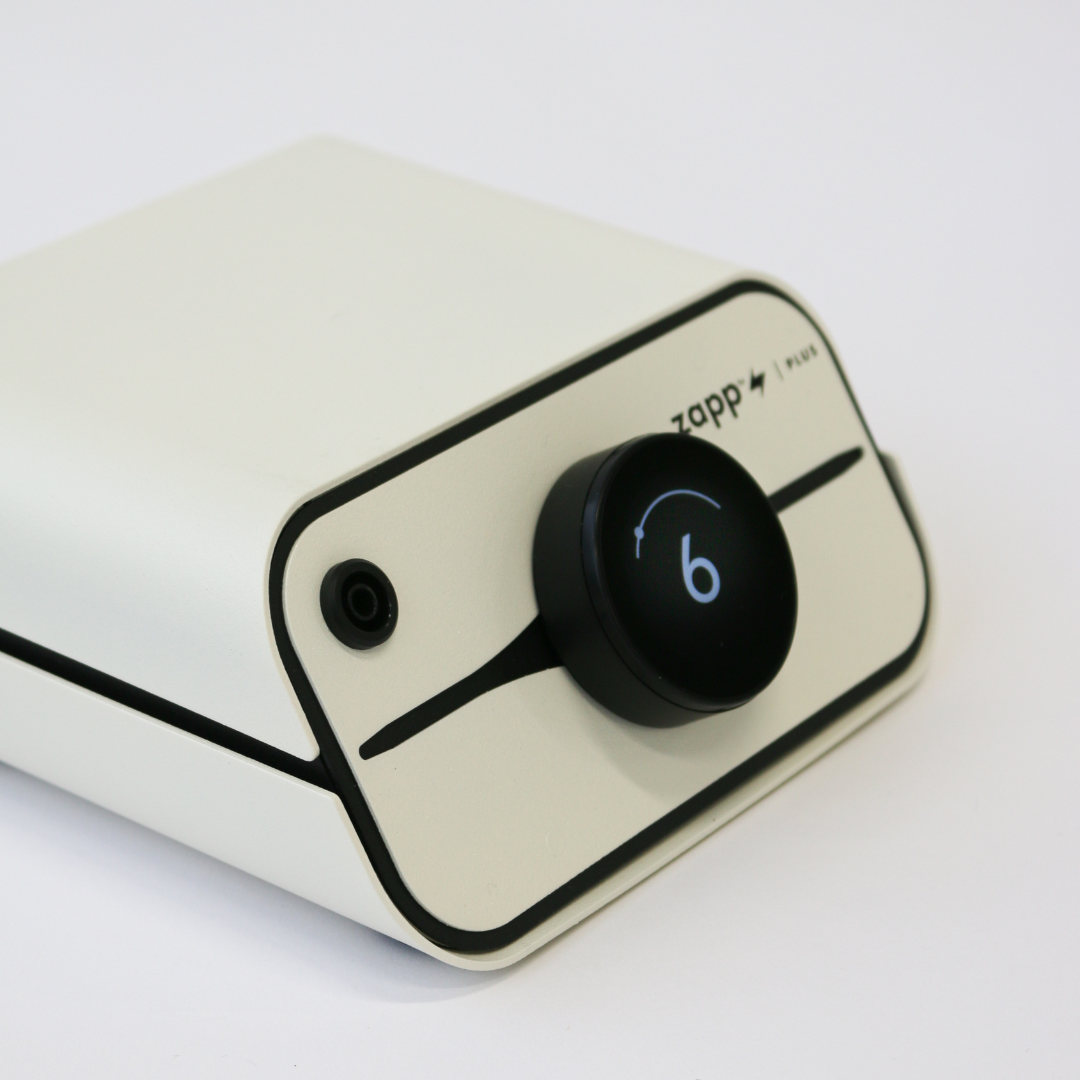
Full 1–30 joule range in the lightest Sunstone (1.9 lbs), with a lock-in digital dial. From $1,699. The move when you know sterling and mixed metals are on your menu from day one.
View at SunstoneThe spec that separates them: joules and metals
Different metals fuse at different energies, so the chain you plan to sell determines the machine you need. The accepted field ranges from operator reports and Sunstone’s own guidance: gold-filled and fine chain weld cleanly around 3–15 joules; sterling and mixed metals want roughly 10–25; platinum and heavy-gauge work needs 30 joules and up.
That tier logic maps directly to the Sunstone line. The Zapp’s 3–10 joule ceiling sits at the top of the gold-filled band. The Zapp Plus 2 and Orion mPulse both reach 1–30 joules, covering the full standard-metal range. The difference between those two is interface and fine control, not more headroom. Choose the machine that matches your metals; buying headroom you will not use is capital you could put toward inventory.
The three machines compared
| Welder | Energy range | Interface | Metal range | Warranty | Price (Aug 2026) |
|---|---|---|---|---|---|
| Sunstone ZappEntry | 3–10 J (1 J steps) | Dial | Gold-filled, fine chain | 3-year | around $1,249 |
| Sunstone Zapp Plus 2Value | 1–30 J (30 settings) | Digital dial + lock | Full standard-metal range | 3-year | from $1,699 |
| Sunstone Orion mPulseFlagship | 1–30 J (0.5 J steps 1–15 J) | Touchscreen | Full range, fine control | 3-year (Circle optional) | from $3,199 |
Specs from Sunstone product pages (verified Aug 2026). Prices drift; confirm on the linked pages before you buy.
Which Sunstone fits which operator
Sunstone Zapp: entry, gold-filled, around $1,249
The Zapp is Sunstone’s beginner machine. It delivers 3–10 joules in single-joule steps on a plain dial, ships argon-ready, and carries the full 3-year warranty and US support the rest of the line does. Sunstone calls it the welder for new permanent jewelry artists, and the design backs that up: a short learning curve, no touchscreen to learn, and a price that leaves money for inventory.
This is Ashley’s machine. If your first season is craft fairs and bachelorette parties welding delicate gold-filled and fine sterling chain, the 3–10 joule range is not a limit you will feel. You are onto a name-brand, US-supported platform for the least Sunstone asks.
The ceiling matters: it is also Maya’s minimum-viable path if she is adding permanent jewelry to an existing market booth. The trade-off is deliberate. If you already know heavier sterling or mixed metals are on your menu, sizing up now costs less than buying twice.
Full review: Sunstone Zapp review. Torn between the Zapp and the Plus 2? Zapp vs Zapp Plus 2 walks that roughly $450 decision.
Sunstone Zapp Plus 2: full range, value, from $1,699
The Zapp Plus 2 is the lightest Sunstone here at 1.9 lbs, and it opens the full 1–30 joule range in 30 settings. That is the same span as the flagship. The interface is a digital energy dial with a lock-in tap so settings hold across a long event without drift, not the touchscreen of the mPulse. Same US manufacturing and 3-year warranty as the rest of the line.
This is the move when you know sterling and mixed metals are on your menu from day one, or when you are an Olivia adding a second service to an existing salon: you already have foot traffic, so volume will come faster and the additional $450 over the Zapp earns back sooner. Maya who plans to grow beyond fine chain in her first year fits here too.
Where it stops: no 0.5-joule fine steps below 15 joules and no touchscreen. For most operators, neither is a real constraint; for a high-volume studio burning through 15+ welds a day, that fine control starts to matter.
Full comparison: Zapp vs Zapp Plus 2 and Zapp Plus 2 vs Orion mPulse.
Orion mPulse: studio flagship, from $3,199
The Orion mPulse is Sunstone’s most capable permanent-jewelry machine. It runs the full 1–30 joule range with 0.5-joule fine steps between 1 and 15 joules, a touchscreen interface, Tru-Fire Technology, and a built-in power supply that fits a vertical or horizontal booth footprint. The optional Sunstone Circle plan can extend the warranty beyond the standard 3 years.
Olivia with an existing salon and group bookings will get the most from this machine. The touchscreen lets an operator set and hold a precise energy level across a full day of walk-ins without resetting by feel. The fine joule steps matter once you are running mixed metals and gauges back to back. None of those features meaningfully accelerate a new operator on fine chain at her first events.
The honest caveat: this is the highest starting price of the three, a real capital decision for anyone still proving the business model. If break-even math is the deciding factor, start with the Zapp or Zapp Plus 2, run the numbers, then upgrade on revenue. The mPulse earns its price most clearly for operators who already have volume.
Full review: Orion mPulse review. Flagship vs entry-range: Zapp vs Orion mPulse.
One honest note on the market
Permanent jewelry is a proven, matured business, not a window that is about to close. US search demand holds around 242,000 a month, up about 8% year over year, on a plateau rather than in freefall. Local markets are rarely saturated: the event-booking constraint is usually the operator’s own calendar, not a flooded town. The economics have not shifted. Material runs roughly $2.50 per weld; operators who price correctly keep $60–90 per bracelet after chain and clasp. That puts a $1,249 Zapp at a countable number of events, not a leap of faith.
For contrast, bundled welder-and-course kits from vendors like Everlinx run $2,999 and advertise income projections the vendor itself labels not guaranteed. We would rather you buy the machine on its specs and let your own booking rate make the case.
Put any of these prices against your own event rate and chain cost. Our calculator turns your numbers into a break-even count, in bracelets and bookings.
Run your payback numbers →Sunstone welder FAQ
Who is Sunstone Welders?
Sunstone is a US-based welder manufacturer whose permanent-jewelry line is the brand most working PJ artists cite. Its machines are made in the USA and backed by US-based customer service and a 3-year warranty. That support network is a big part of what the premium pays for: when a weld fails at a paid event, you can reach a human.
Which Sunstone welder is best for beginners?
The Zapp, at around $1,249. It covers gold-filled and fine chain on a simple dial, ships argon-ready, and carries the same US warranty and support as the rest of the line. If you already know sterling and heavier metals are on your menu from the start, the Zapp Plus 2 opens the full 1–30 joule range for about $450 more.
What is the difference between the Zapp Plus 2 and the Orion mPulse?
Both reach the full 1–30 joule range. The mPulse adds a touchscreen, Tru-Fire Technology, and 0.5-joule fine steps below 15 joules, aimed at high-volume studios. The Zapp Plus 2 delivers the same range on a lock-in digital dial, weighs 1.9 lbs, and costs less. The premium buys interface speed and fine control, not more joules.
Are Sunstone welders worth the price over Amazon machines?
For a working business, usually yes. A budget pulse-arc from Amazon is the cheapest way to test the format, but Sunstone earns its higher price through consistent welds, in-stock tungsten electrodes, a 3-year warranty, and US phone support you can reach mid-event. Many operators start on a budget machine and reinvest into a Sunstone once sales prove the model.
Is permanent jewelry still a good business in 2026?
Permanent jewelry is a proven, matured market rather than a peak-trend window. US search demand holds around 242,000 a month, up about 8% year over year, on a plateau rather than in freefall. Local markets are rarely saturated, and the business economics have not changed: gold-filled and fine chain weld at roughly $2.50 in material per service, and operators who price correctly typically keep $60–90 per bracelet after supplies.
See how Sunstone stacks up against budget machines in the best permanent jewelry welders roundup, or read the Sunstone vs budget welders comparison for what the $300–$800 field actually costs you.