By June Calloway, EditorLast updated: August 20, 2026
Permanent jewelry (a welded chain bracelet, anklet, or necklace with no clasp) is one of the cleaner small-business models going: a short kit of tools, a high-margin product, and events where customers line up.
A proper launch runs about $5,000–$10,000 all-in, per operators cited by Sunstone. A bare pop-up start can come in at $2,500–$5,000. The entry kit tends to pay for itself in roughly 42 appointments.
This guide walks the setup in the order that matters: the honest market read, what you'll spend, what you'll earn, the gear, the permits, and your first event.
The honest market read: proven and matured, not exploding
Before you spend a dollar, the question in the back of your mind is probably "is it too late?" Here's the straight answer, and it's good news for a careful operator.
Permanent jewelry draws about 242,000 US Google searches a month (per Glimpse). Search interest grew only about 8% year over year, so the trend has plateaued rather than declined. It normalized; it didn't collapse. National retailers rolling the service into 160-plus locations say the same thing: it's mainstream now.
Why a plateau beats a boom for you: the gold-rush framing that pulls in impulsive competitors has faded, but customer demand at markets, bachelorettes, and boutiques is steady. Saturation is local, not national. A city can have room for one more good operator even when the national trend is flat.
Demand also swings with the calendar. It's quiet November through February, then climbs through spring and summer wedding and market season. Plan your launch and inventory around that.
What it costs to start: about $1,500 lean, $2,500 bare, $5,000–$10,000 proper
The biggest line, by far, is the welder, which is why the same business gets started at three very different budgets. Cheapest first:
- Lean start: about $1,500. An entry-tier name-brand welder plus minimal chain and accessories. The Sunstone Zapp lists at $1,249, the lowest-priced way onto a name-brand platform, and a first run of chain and clasps, plus the hand tools to work it, adds roughly $150–400 on top. That is the figure our profit calculator defaults to. What you give up at this tier: no training bundle, so you self-teach on scrap chain; a thin chain inventory you restock out of early sales; and an entry-tier machine built for gold-filled and fine sterling rather than the full joule range. The step up to the next tier mostly buys paid training and deeper inventory. Treat $1,500 as a floor you can start from and outgrow.
- Bare pop-up start: $2,500–$5,000. A budget welder, a little chain, and basic training. Enough to work a market table with room for a training course and a real chain run behind it.
- Proper professional launch: $5,000–$10,000 all-in, per operators cited by Sunstone. The accessory layer alone (argon, optics, electrodes, plus chain and hand tools) adds $200–$1,500 beyond the machine.
Whichever tier you start at, the line items are the same. A realistic budget breaks down roughly like this:
- Welder: the big decision. A budget Amazon pulse-arc machine or all-in-one kit can start you under a few hundred dollars; a name-brand Sunstone runs into four figures. This one choice dominates your startup cost. See the welder roundup for the trade-offs and the cost breakdown for the wider picture.
- Chain, clasps, and supplies (roughly $150–400). A supplies kit in sellable metals (gold-filled and sterling). Our starter kit roundup covers what belongs in the box.
- Table, display, and signage. A folding table, a mirror, a small display, and a clear price sign.
- Insurance and licensing: small but non-optional. A business license and a liability policy (more below).
A common path is to start light with a budget setup and a small chain inventory, then reinvest bracelet revenue into a name-brand welder once sales prove the model. The equipment is a fixed cost you pay back across a number of welds, which is why the pricing math below matters so much.
The equipment you need
The kit is short, which is part of the appeal. Two categories cover almost everything:
- The welder. A pulse-arc (micro-arc) machine fuses the chain ends with a fast electrical pulse: no flame, no solder. This is the tool that decides whether a weld holds in front of a paying customer, so it's where your money should concentrate. Compare the machines in the best permanent jewelry welders guide.
- Chain, clasps, and consumables. Gold-filled and sterling chain by the foot, lobster clasps, jump rings, and connectors, plus pliers and cutters. The starter kit roundup breaks down kit types and why chain metal is the whole ballgame, and bulk craft-supply houses cover the restocks (wholesale chain and jump rings at PandaHall) once you know what sells.
New to the mechanics of how the weld actually works? The what is permanent jewelry explainer covers the pulse-arc process, metals, and removal in plain terms.
Training and practice
The pulse-arc motion itself is fast to pick up, but repeatable welds take practice. Before you weld on a paying customer, run practice reps on scrap chain until your welds are consistent across the gauges you'll sell. A cold weld that snaps at an event costs you the sale and the customer's confidence.
There are two broad routes. Many operators self-teach with their own welder and a spool of practice chain. Others go through a formal training program; some of those programs bundle a welder into the package. The Pepetools Helix, for example, is offered through the LINKED training program as well as sold direct. If you go the training route, ask which welder the program includes before you buy a machine separately, so you don't pay for two. We don't quote course prices here because they change and vary by provider; confirm current pricing with the program directly. For the full breakdown of free vs paid options and what you actually need before your first event, see our permanent jewelry training guide.
Permits, licenses, and insurance: the short version
This part is unglamorous and non-optional, and the specifics vary by state and locality, so check yours. The short version:
- Register a business and get a seller's permit for sales tax.
- Line up general, professional, and product liability insurance, which most event hosts, salons, and landlords require before they let you set up.
- Mobile and pop-up sellers often need special-event or vendor permits on top.
- Plan on roughly two to four weeks for it all to clear.
The full walk-through, the three coverages and what each protects, the license and permit checklist, and the timeline, lives on our permanent jewelry insurance and licensing page. It's general information, not legal advice; confirm the specifics with your state, your city, and a licensed agent.
Pricing and margin: the money section
This is why people start this business. The per-unit economics are strong. Working operators commonly report roughly $60–90 of profit per welded bracelet after the cost of chain and clasp. The simple math looks like this:
- Your cost per bracelet is mostly the chain (priced by the foot) plus a connector or clasp, often just a few dollars in gold-filled, more in solid gold.
- Your price commonly lands in the $40–100 range depending on metal and market, with gold-filled at the lower end, sterling in the middle, solid 14k gold at the top.
- Your profit per weld is the gap between the two, which is where the reported $60–90 figure comes from on mid-range metals.
Because the margin per weld is high, your constraint is volume, not per-unit economics. The equipment is a fixed cost you amortize across welds. At $60–90 a bracelet, a four-figure name-brand welder pays for itself across a modest number of events, which reframes the "expensive machine" question entirely. Run your own numbers against the metals you plan to sell and the events you can realistically book. Our free profit calculator turns your startup cost and bracelet price into a break-even count in bracelets and events, the pricing guide sets what to charge by metal and market, and the cost page shows what customers actually pay.
What you'll actually earn (ranges by model, not vendor projections)
Earnings track how you run the business, so the honest way to state them is as ranges tied to effort, not a single promise. As operators report:
- Pop-up only: roughly $10,000–$23,000 a year net, a weekends-and-markets pace.
- Mixed model: roughly $26,000–$55,000 a year net, pop-ups plus private parties and standing appointments.
- Full-time: roughly $50,000–$80,000 a year net for operators who treat it as their main work.
You'll see much bigger numbers from kit sellers. Everlinx, for one, projects around $168,000 a year at 10 bracelets a day and $240,000 at 30, and to its credit it labels those figures illustrative and explicitly not guaranteed. Treat them that way. The margin behind all of it is genuinely strong: operators commonly report 90% or more profit per weld and 70–85% at the operation level after overhead. The per-unit economics almost always work. What decides which range you land in is volume: how many wrists sit down at your table.
The four ways beginners fail, and how to avoid each one
The economics are forgiving; the execution is where people stumble. Four failure modes account for most of it:
- Undercutting on price. Thin pricing gets eaten alive by event fees, travel, supplies, transaction fees, and taxes. Set a real minimum; the pricing guide shows where.
- Cheap welders and materials. The top beginner-failure cause: inconsistent welds, tarnish, and breakage that cost you repeat customers. Buy the machine on its merits from the welder roundup.
- Expecting overnight success. There's a normal ramp. Operators who quit during it never reach the steady bookings the numbers above assume.
- Poor personal fit. This is a public, social, logistics-heavy business: talking to strangers, hauling a booth, promoting yourself. If that drains you, know it before you spend, not after.
Your gear: pick the welder tier first, then the kit
Sequence the two big buys in the right order. Choose your welder tier first, because your metals decide it, then build the kit around that machine. Gold-filled-only work starts at the entry tier; sterling wants the full joule range; platinum needs an Orion-class machine. The best permanent jewelry welders guide walks the tiers with live-checked prices, and the starter kit roundup covers the $200–$1,500 of accessories that go around it.
Your first 90 days: pricing, events, and the 50–80-chain launch benchmark
Give yourself a target for the first stretch. Sunstone's cited benchmark for a successful launch is selling roughly 50–80 chains, and a busy four-to-six-hour pop-up typically produces 8–15 appointments. So the launch is a handful of well-chosen events, not a grind. Price your menu with the pricing guide first, then fill the calendar. The product sells best where people already are and in a celebratory mood. Proven channels for early bookings:
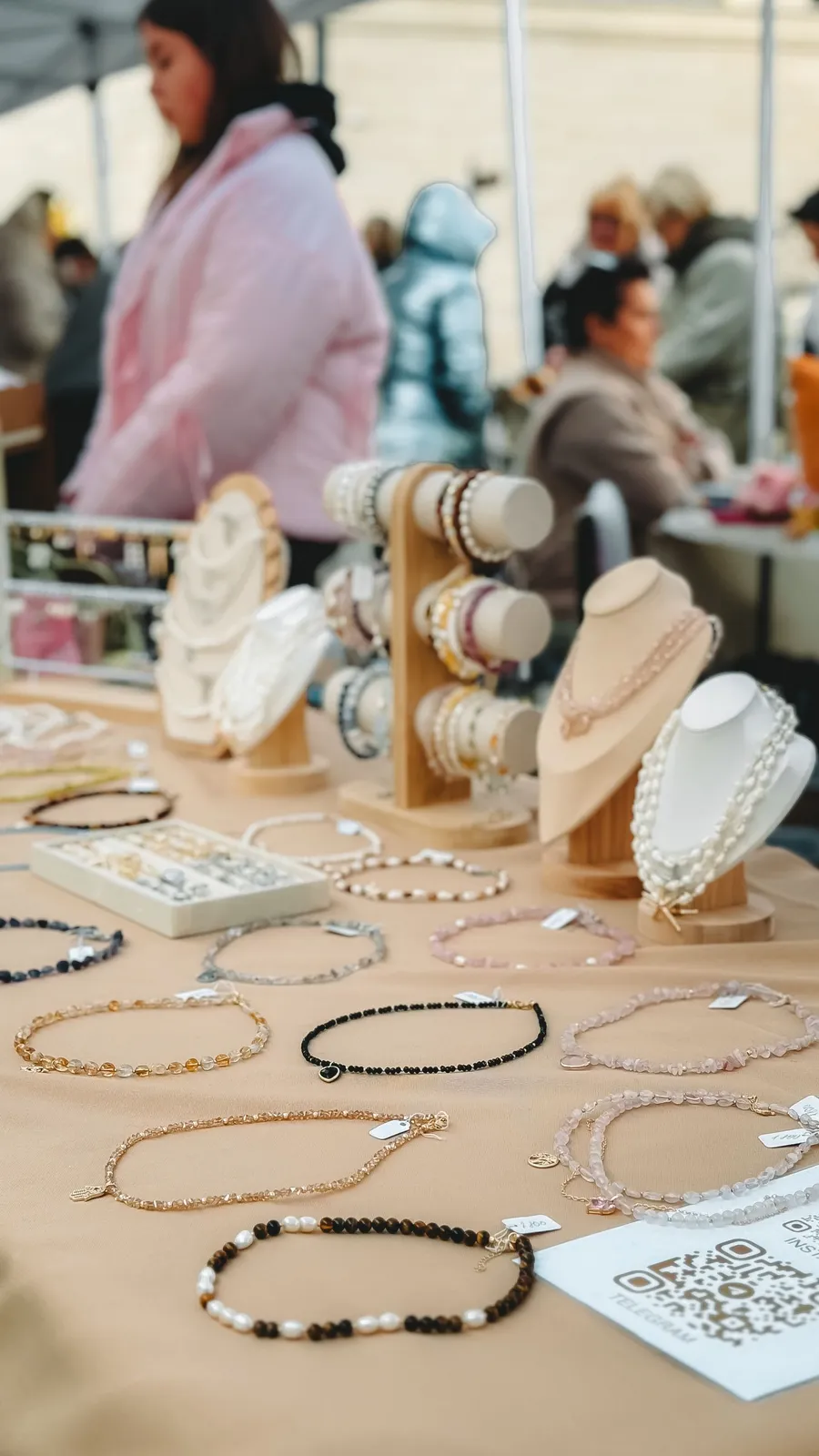
- Pop-ups and markets. Craft fairs, farmers' markets, and makers' markets put a stream of curious foot traffic in front of you, the classic first venue.
- Salon and boutique partnerships. Set up in a hair salon, nail studio, or clothing boutique on a revenue-share or booth-fee basis; you borrow their traffic, they add an experience.
- Private and partner events. Bachelorette parties, birthdays, bridal showers, and corporate events book you for a flat rate plus per-bracelet, for high-value bookings that fill a calendar.
- Referrals and social proof. Permanent jewelry is inherently shareable; a clean before/after clip and a simple booking link turn one event's customers into the next event's crowd.
Putting it together
The sequence that works: decide your welder (the big spend), assemble a supplies kit in sellable metals, practice until your welds are consistent, sort out your license and insurance, set prices with the margin math above, and book a first pop-up. Start here:
- Compare machines in the best permanent jewelry welders guide.
- Kit yourself out with the best permanent jewelry starter kits.
- Understand demand and pricing from the permanent jewelry cost page.
- Brush up on the fundamentals in what is permanent jewelry.
Starting a permanent jewelry business FAQ
How much does it cost to start a permanent jewelry business?
Equipment is the big line and the single largest decision. A budget Amazon welder can run a few hundred dollars; a name-brand Sunstone runs into four figures. Add chain and clasps (roughly $150–400), plus a table, insurance, and a business license. Many operators start light and reinvest into a name-brand welder once sales prove the model.
Do you need a license to sell permanent jewelry?
Requirements vary by state and locality, so check yours. In general, you register a business, collect and remit sales tax where required, and often carry a local business license. Most event and salon hosts also want to see liability insurance. Treat this as a starting checklist, not legal advice; confirm the specifics locally.
How much profit is there in permanent jewelry?
Working operators commonly report roughly $60–90 of profit on a welded bracelet after chain and clasp cost. A foot of gold-filled chain plus a connector costs a few dollars against a $40–100 price, so the margin per weld is high. The constraint is customer volume, not per-unit economics. The equipment is a fixed cost you pay back across welds.
How long does it take to learn to weld permanent jewelry?
The pulse-arc motion is quick to learn and painless for the customer. Consistency takes longer: practice reps on scrap chain before you weld on paying customers. Some operators self-teach; others take a training program, some of which include the welder. Budget practice time before your first event so a failed weld does not cost you a sale.
Is permanent jewelry a good business?
For the right person, the economics are hard to argue with: 90%-plus margin per weld, low overhead, and steady demand (about 242,000 US searches a month, up only 8% year over year). It rewards people who enjoy public, social selling and book events consistently. It punishes undercharging, cheap gear, and overnight-success expectations. Run your own numbers first.
Is permanent jewelry too saturated?
The trend has plateaued nationally, and retailers have added the service in 160-plus locations. But saturation is local, not national. What matters is whether your city and event calendar have room for one more good operator, and most do. A steady, mature market is easier to plan around than a boom full of impulsive competitors.
Do I need to be crafty or artistic to do permanent jewelry?
No. The advice from working operators is to keep it simple: stock one to three popular styles per metal rather than a huge range, and let taste and consistency carry you rather than craft skill. The weld itself takes minutes to learn. The skills that actually decide whether you succeed are pricing and showing up, not artistry.
You now know the costs and the sequence. Before you buy anything, see what you can earn per bracelet in the permanent jewelry profit calculator: your startup cost and bracelet price become a break-even in bracelets and events. Then choose your machine in the best permanent jewelry welders guide.