By June Calloway, EditorLast updated: August 20, 2026
Almost every Sunstone shopper hits this choice: the Zapp is right there at $1,249, and for a few hundred dollars more the store offers a version with more range. Both machines are pulse-arc welders made in the USA, backed by the same 3-year warranty and US phone support you can actually reach when a weld fails in front of a paying customer. The gap between them is not brand quality or reliability. It is joules and the metals those joules unlock.
The Sunstone Zapp delivers 3–10 joules in single-joule steps on a plain dial. The Sunstone Zapp Plus 2 delivers 1–30 joules across 30 settings on a lock-in digital dial, weighs 1.9 lbs, and starts from $1,699. Roughly $450 and 20 joules separate them. Whether that gap matters depends entirely on the chain you plan to sell.
The two machines, side by side
| Welder | Energy range | Control | Metal range | Weight | Warranty | Price (Aug 2026) |
|---|---|---|---|---|---|---|
| Sunstone ZappEntry | 3–10 J (1 J steps) | Dial | Gold-filled, fine chain | ~2 lb class | 3-year | $1,249 |
| Sunstone Zapp Plus 2Step up | 1–30 J (30 settings) | Lock-in digital dial | Full standard-metal range | 1.9 lb | 3-year | from $1,699 |
Specs from Sunstone product pages, live-checked August 2026. Price varies by color and stylus option; check the linked pages for current pricing.
The joule ceiling is the whole decision
Different metals fuse at different energies. Based on Sunstone’s own guidance and operator reports, gold-filled and fine chain weld cleanly in the 3–15 joule range; sterling and mixed metals want roughly 10–25 joules; platinum and heavy-gauge work needs 30 and up.
The Zapp’s 3–10 joule ceiling sits right at the top of the gold-filled band. That is a deliberate product decision, not a defect. Sunstone built it for operators whose first season is fine chain and priced it accordingly. If gold-filled is your whole menu, you will not feel that ceiling. The day you add heavier sterling or mixed metals, you will.
Step up to the Zapp Plus 2 and that ceiling disappears. Its 1–30 joule range covers the same span as the flagship Orion mPulse. An operator adding permanent jewelry to an existing salon or boutique with mixed-metal clients already walking in will use that headroom from week one. A first-season pop-up artist welding gold-filled at bachelorette parties probably will not.
The lock-in dial: does it matter?
Both machines are dial-driven, so neither has the mPulse touchscreen. The difference is that the Zapp Plus 2’s digital dial locks in place with a tap, holding your energy setting across a full event instead of drifting if the knob gets bumped between customers in a busy booth. For a short weekend pop-up, re-checking a plain dial is a minor inconvenience. Across a six-hour market day or a multi-operator bachelorette booking, a setting that holds is one fewer variable per weld.
If you run long events or expect to hand the machine to a trained employee and want consistent output across the shift, the lock-in dial earns its share of the price difference. If you weld in short, controlled sessions at a solo pop-up, the plain dial on the base Zapp is fine.
Portability
At 1.9 lbs and a 13.3 × 15.5 × 6.9 cm footprint, the Zapp Plus 2 is the lightest Sunstone and genuinely bag-and-go for mobile operators. The base Zapp is compact too, but if your business model is driving between venues with your welder in a tote, the Plus 2 makes the daily carry noticeably easier.
The price gap and what the business does with it
Roughly $450 separates the two. Against the machine cost that is a large percentage; against the business it is small. At $60–90 profit per bracelet (the range operators typically report after chain and clasp cost at a correctly priced service), the gap closes in five to eight welds, easily one busy afternoon. The honest question is not which machine costs less but whether you will sell the metals that need more than 10 joules.
If the answer is yes, buying the Zapp Plus 2 now avoids paying the $450 difference twice over: once for the Zapp you outgrow and again for the upgrade. If the answer is not yet, the $450 buys a meaningful amount of sellable gold-filled chain and the Zapp does the job well.
Which Zapp should you buy?
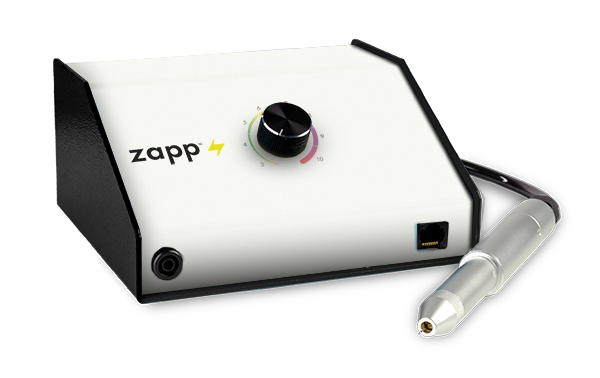
Gold-filled and fine chain are your whole first season, and you would rather put the ~$450 difference into sellable inventory. The 3–10 joule range is not a ceiling you will feel on that menu.
View Zapp at Sunstone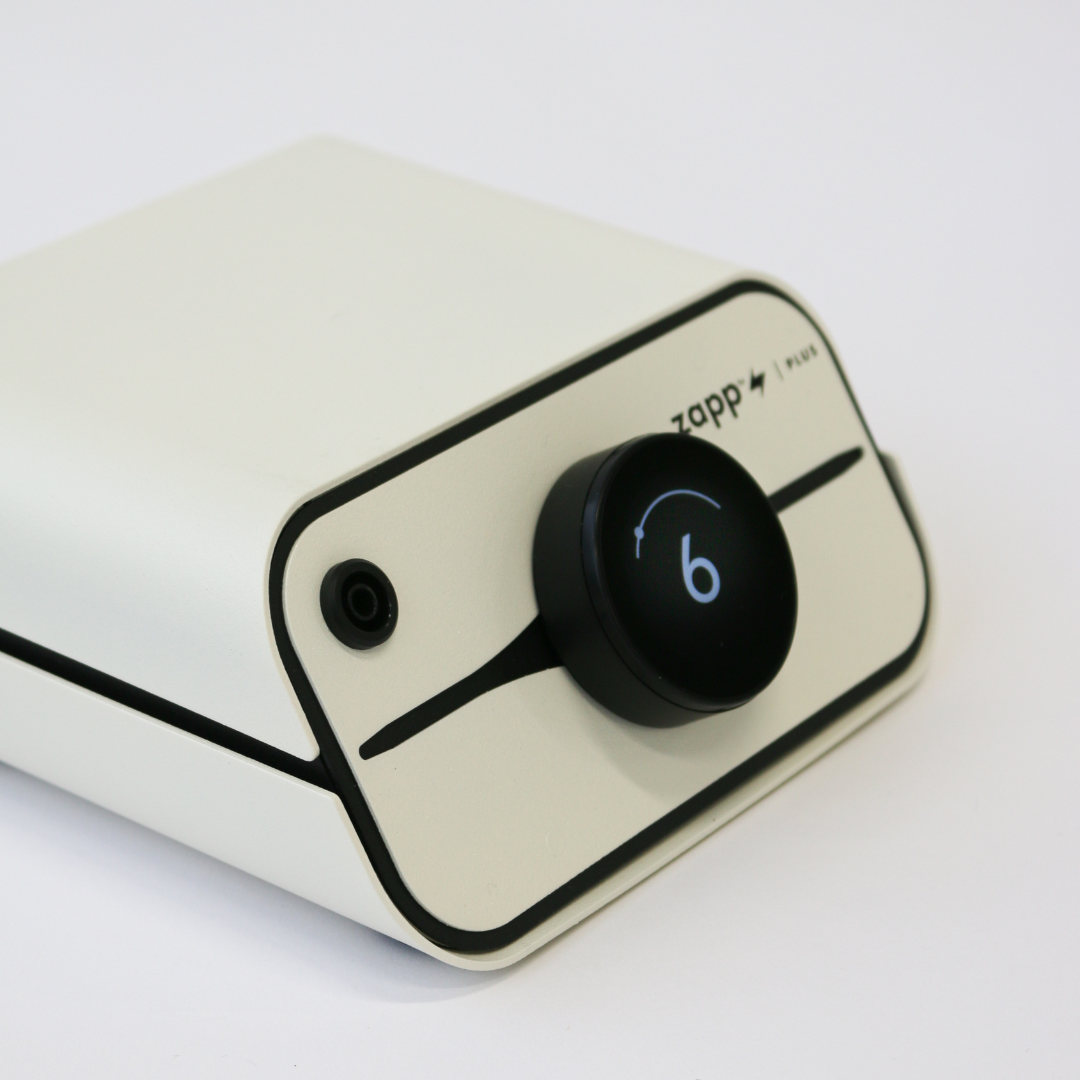
Sterling or mixed metals are on your menu, you run long events where a lock-in dial keeps welds consistent, or you already have foot traffic and want volume capacity from day one. The lightest Sunstone at 1.9 lbs; same 3-year warranty.
View Zapp Plus 2 at SunstoneIf you already know mixed metals and high volume are your trajectory, it is worth looking past both to the Orion mPulse (from $3,199), which adds a touchscreen and 0.5-joule fine steps for studio-level control. The Zapp vs Orion mPulse comparison frames that larger jump. For the budget side of the market, the Pepetools Helix reaches 1–30 joules for around $1,499. The whole field is in the welder roundup.
Either way, run the payback before you commit. Permanent jewelry is a matured, proven market: US search demand holds at around 242,000 searches a month, up about 8% year over year, on a plateau rather than in freefall. At $60–90 profit per bracelet, a $1,249 Zapp is a countable number of events; a $1,699 Zapp Plus 2 is only a handful more.
Put either price against your own event calendar and chain cost and the decision becomes math, not a guess. Our calculator turns your numbers into a break-even count, in bracelets and bookings.
Run your payback numbers →Zapp vs Zapp Plus 2 FAQ
What is the difference between the Sunstone Zapp and the Zapp Plus 2?
Range and control. The Zapp covers 3–10 joules in single-joule steps on a plain dial, enough for gold-filled and fine chain, and lists at $1,249. The Zapp Plus 2 opens the full 1–30 joule range across 30 settings and adds a lock-in digital dial that holds your energy setting across a long event, all in a lighter 1.9-lb body, from $1,699. Both are Made in the USA with a 3-year warranty and the same US phone support.
Is the Zapp Plus 2 worth the roughly $450 extra?
It depends entirely on the metals you plan to weld. Gold-filled and fine chain weld cleanly in the 3–10 joule window the base Zapp covers; that ceiling is not a constraint on that menu. Heavier sterling and mixed metals want 10–25 joules, which the Zapp Plus 2 opens. If sterling is on your menu from day one, sizing up now avoids a second purchase later. If your first season is fine gold-filled chain at pop-ups, the $450 buys a lot of inventory.
Does the Zapp Plus 2 cover the same metals as the Orion mPulse?
On joule range, yes: both reach 1–30 joules and cover the full standard permanent-jewelry metal range. The Orion mPulse (from $3,199) adds a touchscreen interface, Tru-Fire Technology, and 0.5-joule fine steps between 1–15 joules for high-volume studio work. The Zapp Plus 2 delivers the same range on a dial for meaningfully less, trading the fine-step control for simplicity.
Which machine is better for a mobile or pop-up operator?
The Zapp Plus 2, at 1.9 lbs and a 13.3 × 15.5 × 6.9 cm footprint, is the lightest Sunstone and the easiest to carry between venues. The base Zapp is a compact desktop unit too, but if a mobile or pop-up schedule is your primary model, the Plus 2 travels more cleanly.
What does the lock-in digital dial on the Zapp Plus 2 actually do?
It lets you set an energy level and tap it in place so the setting holds across a full event without drifting if the knob gets bumped in a busy booth. On the base Zapp you re-check the dial by feel between customers. For a short weekend pop-up that is a minor difference; across a six-hour bachelorette or market day, the lock-in reduces one variable between every weld.
Read the full Sunstone Zapp review, see the whole Sunstone lineup, or check the Pepetools Helix for a full-range dial machine at a lower entry price.